

A storm can leave your property looking like a problem that needs to be fixed immediately. That instinct is understandable. But before debris is hauled away, a tarp goes up, or a broken window is replaced, knowing how to document storm damage can make the claims process much clearer.
Your record helps show what happened, when it happened, and what the property looked like before permanent repairs changed the scene. The goal is not to prove the claim by yourself. The insurance carrier evaluates coverage and makes claim decisions. Your job is to preserve accurate information and take reasonable steps to prevent further damage.
Start with safety, then preserve the scene
Do not enter a damaged building until it is safe. Downed power lines, standing water near electrical equipment, unstable trees, damaged roofing, gas leaks, and weakened structures can turn a property claim into a serious injury. If you suspect an immediate danger, contact emergency services or the appropriate utility before taking photos.
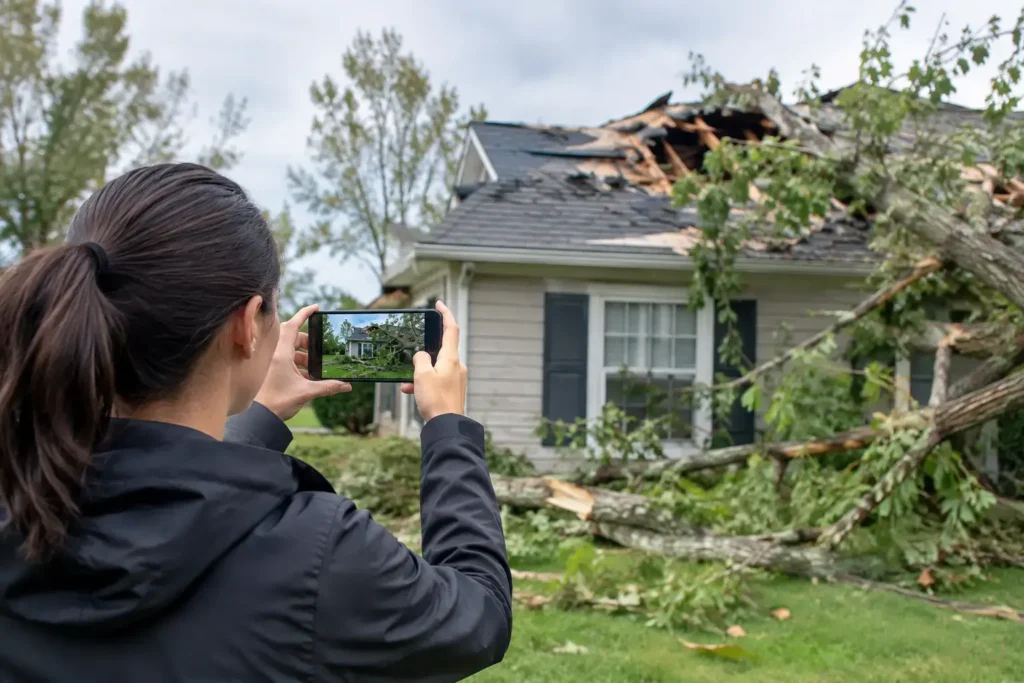
Once it is safe, resist the urge to clean everything up at once. Take a few minutes to document the overall scene as you found it. Wide photos of the house, business, vehicle, roofline, yard, fence, or outbuilding provide context that close-up images cannot.
For a business, photograph affected inventory areas, equipment, entrances, storage rooms, and any water intrusion. For a home, include the exterior, each affected room, damaged personal property, and visible roof or siding issues. If storm debris is on a vehicle, RV, boat, ATV, or motorcycle, capture its position and the surrounding area before moving it if practical and safe.
How to document storm damage with photos and video
Photos are often the backbone of a storm damage record. Use your phone if that is what you have. Clear, well-organized images taken promptly are more useful than waiting for perfect equipment or lighting.
Start wide, then move closer. A good sequence might show the entire side of a home, then the damaged section of siding, then a close-up of cracked or missing material. For water damage, photograph the room from the doorway, the path of the water, stained ceilings or walls, wet flooring, and affected belongings. Include a recognizable point of reference when possible, such as a doorway, window, or measuring tape.
Video can add useful context, especially after wind, hail, or flooding. Walk slowly through the affected area and narrate what you are showing: “Water is entering near the rear window,” or “These branches fell onto the detached garage.” Keep the video steady and avoid making assumptions about the cause. Describe what you can actually see.
Do not put yourself at risk to get a photo. Climbing onto a wet roof, walking under hanging limbs, or approaching power lines is not worth it. Photos from the ground are still valuable, and a qualified contractor can later inspect areas that are unsafe to access.
Write down the details people forget later
Storm damage is easier to describe on the day it happens than two weeks later. Create a simple written log in your phone, email, or notebook. Record the date and approximate time you discovered the damage, the type of weather involved, and which areas were affected.
Note practical details such as whether the power went out, whether water entered the building, whether a tree or branch struck the structure, and whether the property became unusable. If you have weather alerts, text messages, or local notices that help establish the timing of the event, save them with your claim records.
For damaged belongings, list the item, its approximate age, make or model if known, purchase price if known, and a short description of the condition. A kitchen table, for example, is easier to identify later if your notes say where it was purchased, when you bought it, and whether it was solid wood, upholstered, or part of a matching set.
Avoid estimating values from memory if receipts, invoices, bank statements, product manuals, or prior photos are available. Save those records. They can help identify an item and support its original cost.
Protect the property from additional damage
Most property owners need to take reasonable temporary steps after a storm. That can mean placing a tarp over an exposed roof area, boarding a broken window, shutting off water to a damaged pipe, or moving undamaged belongings away from an active leak. Document the damage before and after these steps whenever possible.
Keep receipts for emergency supplies, temporary repairs, water extraction, boarding, tarps, and related services. If you hire someone for emergency work, ask for an itemized invoice and keep the contractor’s contact information. Take photos of the temporary protection in place as well.
There is a balance here. Do not delay necessary emergency work just because you are waiting for an adjuster. At the same time, avoid authorizing major demolition or permanent repairs until you have reported the claim and understand the carrier’s next steps, unless immediate action is needed to prevent further loss. Save removed materials when practical, especially if they help show the type and extent of damage. If disposal is necessary for health or safety reasons, photograph the materials first.
Report the claim promptly and keep one file
Notify your carrier as soon as you can after documenting the initial damage and addressing urgent safety concerns. Have your policy number, date of loss, contact information, and a concise description ready. Be factual: explain what you observed and what temporary actions you took.
Create one folder for everything connected to the loss. A digital folder can hold photos, videos, receipts, emails, estimates, claim numbers, and notes from phone calls. Name files clearly, such as “north roof slope – March 14” or “water-damaged living room rug.” This is far easier to manage than searching through hundreds of unlabeled images later.
When you speak with the carrier, contractor, restoration company, or adjuster, write down the date, the person’s name, and the main points discussed. If someone gives you an estimate or report, ask for it in writing. Clear records reduce confusion when several people are involved.
Be careful with contractors after a storm
After widespread hail, wind, or water damage, contractors may arrive quickly. Some are reputable; others pressure property owners to sign paperwork before the scope of damage is understood. Take your time, verify who you are working with, and read any agreement before signing it.
A contractor’s estimate can be useful, but it is not the same as a carrier’s coverage decision. The amount payable, deductible, exclusions, limits, and repair requirements depend on the specific policy and carrier. Do not assume every repair recommendation will be covered, and do not let uncertainty stop you from documenting the condition thoroughly.
For commercial properties, the same caution applies to restoration vendors, roofers, and equipment repair companies. Keep operational decisions moving, but maintain a written trail for emergency expenses, damaged stock, and steps taken to reduce interruption.
Do not forget less obvious damage
Some storm damage is easy to miss in the first hour. Hail can damage gutters, vents, skylights, outdoor HVAC equipment, sheds, fences, and recreational vehicles. Wind can loosen shingles or siding without causing an immediate leak. Water may travel behind walls, under flooring, or into cabinetry before it becomes visible.
Walk the property again when conditions are safe and daylight improves. Check detached structures and outdoor equipment. If your home or business has security cameras, save footage before it is overwritten. If neighbors captured photos showing the storm’s timing or impact near your property, those images may also be worth preserving.
For residents of Utah and Arizona, hail and high winds can create damage that is not always obvious from the driveway. In Idaho, heavy snow, wind, and falling branches can create their own mix of roof, water, and exterior issues. The documentation process is the same: record the facts, preserve evidence, and protect the property safely.
A storm claim can feel like another major task at the exact moment you have the least time for one. Start with a safe walk-through, capture what you see, save every related record, and ask questions before permanent work begins. If you work with Platinum Insurance Group, you can also ask us to help you through the claims process and follow up with the carrier as needed.