

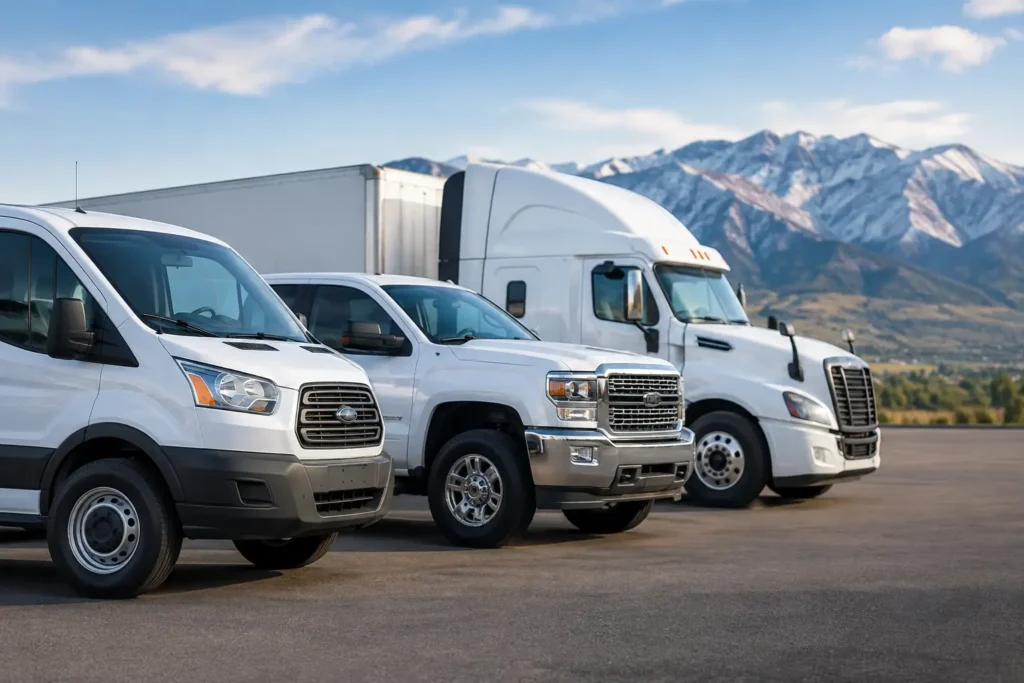
A work vehicle can create a business problem in seconds. A contractor backs into a customer’s garage, a delivery driver is rear-ended on I-15, or an employee uses a personal pickup to pick up supplies and causes an accident. Commercial auto insurance Utah business owners choose should address what actually happens on the road, not just meet a registration requirement.
The right policy protects more than a vehicle. It helps protect your business income, your customer relationships, and the assets you have worked to build. The challenge is that commercial auto coverage is not one-size-fits-all. A plumber with two service vans, a real estate team with employees driving their own cars, and a company operating a dozen delivery vehicles have very different risks.
What Commercial Auto Insurance Covers
Commercial auto insurance is designed for vehicles used in connection with a business. That may include company-owned cars, pickups, vans, box trucks, trailers, or specialty vehicles. It can also extend to certain situations involving rented, leased, borrowed, or employee-owned vehicles.
The foundation of the policy is liability coverage. If your driver causes an accident, liability coverage can help pay for another party’s injuries and property damage, up to the policy limits. Utah requires vehicle owners to carry minimum liability limits, but state minimums are rarely a sound stopping point for a business. A serious injury claim can exceed those limits quickly, leaving the business responsible for the difference.
Most commercial policies can also include coverage for damage to your own vehicles. Collision coverage applies when a covered vehicle hits another vehicle or object, while comprehensive coverage can respond to non-collision losses such as theft, vandalism, hail, fire, or an animal strike. For a financed or leased vehicle, physical damage coverage is often required by the lender.
Other valuable protections may include uninsured and underinsured motorist coverage, medical payments or personal injury protection where applicable, towing, rental reimbursement, and roadside assistance. The availability and details vary by carrier, vehicle type, and how the vehicle is used. That is why a quick online quote can miss important gaps.
When a Personal Auto Policy Is Not Enough
Many business owners assume a personal auto policy will cover them because the vehicle is titled in their own name. Sometimes it may provide limited protection for occasional business use, but that assumption can become expensive when business driving is regular, specialized, or involves employees.
A personal policy may not be built for a vehicle carrying tools, making deliveries, transporting clients, towing equipment, or traveling to multiple job sites every day. It may also exclude or limit coverage for certain commercial activities, particularly delivery and for-hire work. If employees drive the vehicle, or if the vehicle is owned by the business, commercial coverage is usually the more appropriate path.
Employee-owned vehicles deserve attention, too. If an employee runs an errand, visits a client, or transports materials in their own car, the business can still be named in a lawsuit after an accident. Hired and non-owned auto liability coverage can help protect the business in these situations. It does not replace the employee’s personal insurance, but it can be an important layer of protection for the company.
How to Choose Commercial Auto Insurance in Utah
The best policy starts with an honest picture of your operations. Insurance companies care about more than the year, make, and model of a vehicle. They also consider who drives it, where it travels, what it carries, how many miles it drives, and whether it is parked securely overnight.
A roofing contractor who drives locally with ladders and materials has a different profile than a regional distributor operating loaded box trucks across state lines. A business that uses a trailer needs to make sure the trailer is scheduled or otherwise properly covered. A company that relies on a single work van may need rental reimbursement or a plan for keeping operations moving after a covered loss.
Set liability limits based on your exposure
Liability limits should reflect the consequences of a worst-case accident, not only the lowest premium. Consider the value of your business assets, contractual insurance requirements, the roads your drivers travel, and the possibility of a serious injury claim. Many customers or general contractors require higher limits before allowing work to begin.
An umbrella policy may be worth considering when your auto exposure is significant. It can provide additional liability limits above qualifying commercial auto and general liability policies. It is not a substitute for proper underlying auto limits, but it can add meaningful protection when a major claim exceeds them.
Review every driver, not just every vehicle
Driver quality has a direct effect on cost and eligibility. Review motor vehicle records before hiring drivers and establish clear rules for personal use, distracted driving, vehicle inspections, and reporting accidents. A written policy will not prevent every loss, but it shows that the business takes safety seriously and helps create consistent expectations.
Be accurate about every regular driver. Leaving a driver off the policy to reduce premium can create problems during a claim and may lead to a policy rewrite or cancellation. If an employee’s duties change and they begin driving regularly, update the policy rather than waiting for renewal.
Do not overlook vehicle values and equipment
Newer work trucks, upfitted vans, attached equipment, and permanently installed tools can be costly to replace. Standard physical damage coverage may be based on the vehicle itself, not every tool or modification inside it. Depending on the setup, tools and equipment may need separate treatment under inland marine, commercial property, or another coverage section.
Ask how claims are settled. Actual cash value accounts for depreciation. Agreed value or stated amount options may be available in certain circumstances, especially for specialty or collector vehicles, but the wording matters. The cheapest option is not always the option that makes recovery easier after a total loss.
What Affects Commercial Auto Insurance Cost?
Premium is based on risk, and no reputable agent should promise the same price for every Utah business. The number and type of vehicles, driver records, annual mileage, garaging location, radius of operation, prior claims, business class, chosen limits, and deductibles all matter.
Raising a deductible can lower the premium, but it also increases the amount your business pays following physical damage. That trade-off can make sense for a company with strong cash reserves and several vehicles. It may be less practical for a small business that cannot easily absorb a large repair bill on its only work truck.
Claims history matters, but a past claim does not automatically mean a business cannot find competitive coverage. Different carriers evaluate industries, vehicle types, and loss history differently. Comparing multiple options is often more useful than assuming your current carrier is the only choice.
Why an Annual Review Matters
Commercial auto policies can become outdated quietly. You buy another truck, hire a new technician, start pulling a trailer, expand into a new service area, or begin using vehicles for a new type of work. Each change can affect coverage and pricing.
An annual review is a practical time to confirm vehicle schedules, driver lists, business use, certificates of insurance requirements, and liability limits. It is also a chance to compare available carrier options rather than accepting a renewal without questions. Platinum Insurance Group can compare commercial auto coverage across multiple carriers while giving you one person to call when you need an answer or a claim needs attention.
Before your next renewal, gather your vehicle list, driver information, current declarations page, and any customer contract requirements. A clear review of those details can help you find coverage that fits the way your business actually operates, so an accident does not become a larger interruption than it has to be.